

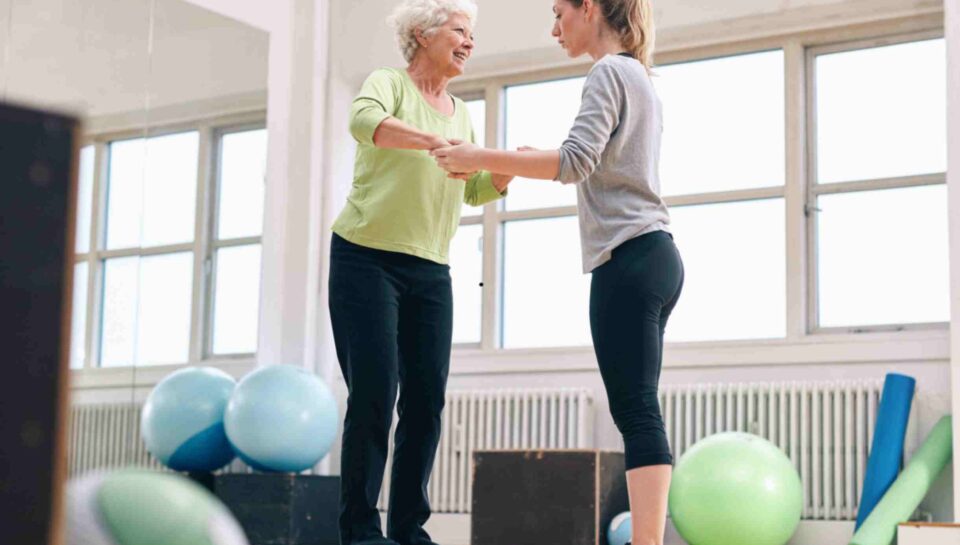
When we think about senior balance exercises, we often picture leg muscle strength. However, biomechanical and neurological research reveals a far more intricate story. Balance isn’t merely a measure of muscle power—it is the real-time result of a complex, tri-fold sensory system.
To maintain equilibrium, the central nervous system processes simultaneous inputs from three distinct streams:
- Visual Cues: Spatial orientation provided by sight.
- Vestibular Input: The inner ear’s fluid-filled canals that detect head motion and gravity.
- Proprioception: The body’s intrinsic sensory network, powered by mechanoreceptors embedded in muscles, tendons, and joints that tell the brain where limbs are in space.
As we age, age-related changes, sedentary habits, or prolonged inactivity can cause a form of “signal decay” within this triad. When proprioceptive signals slow down, simple daily movements—like stepping over a rug or navigating a curb—can suddenly feel uncertain. This hesitation often triggers a psychological fear of falling, which ironically leads to restricted activity, further muscle atrophy, and increased fall risk.
The good news? Neuromuscular plasticity remains active throughout our entire lives. By engaging in targeted, low-impact routines, seniors can retrain these neural pathways, restore spatial awareness, and rebuild daily confidence.
The Biomechanics of Core Stability and Gait Velocity
Evaluating the biomechanics of core stability and gait velocity in seniors reveals a clear physical relationship: a strong, responsive core acts as the body’s central anchor. When the deep abdominal muscles, paraspinals, and gluteal complex are engaged, the center of mass remains stable over the base of support. This stability directly improves stride length, gait speed, and physical reaction times.
Clinical research highlights that neuromuscular adaptations to low-impact balance interventions occur within just 8 to 12 weeks of consistent daily practice. Short, daily movement sessions—lasting just 10 to 15 minutes—can significantly enhance postural sway control, reduce fear-driven gait hesitation, and lower the risk of balance-related injuries.
4 Research-Backed Micro-Exercises for Daily Balance & Proprioception
These evidence-based exercises focus on balance exercises for seniors to prevent falls by directly targeting vestibular balance training for older adults, proprioception, and core stabilization.
Perform these exercises near a sturdy counter or chair for support.
1. The Supported Single-Leg Stance (Proprioceptive Reset)
- Target Area: Ankle stability, deep hip stabilizers, and joint position sense.
- How to do it: Stand tall next to a sturdy countertop, lightly resting your hands on the surface. Shift your weight onto your right foot while lifting your left foot a few inches off the floor. Hold for 10 to 20 seconds while focusing your eyes on a fixed spot across the room. Lower your foot and switch sides.
- The Science: This exercise forces the mechanoreceptors in your standing ankle to make micro-adjustments, sharpening how to improve proprioception in elderly individuals.
2. Tandem Standing & Heel-to-Toe Walking
- Target Area: Narrow base-of-support stability and gait alignment.
- How to do it: Place your right foot directly in front of your left foot so your right heel touches your left toes (like standing on a balance beam). Hold for 15 seconds. Once comfortable, take 10 slow steps forward in this line, touching heel-to-toe with each step while keeping your eyes looking straight ahead.
- The Science: Tandem placement narrows your base of support, challenging both inner ear alignment and visual tracking.
3. Seated Core Engagement & Marching
- Target Area: Deep trunk activation and pelvic stability.
- How to do it: Sit upright near the front edge of a sturdy, armless chair with your feet flat on the floor. Draw your belly button gently inward toward your spine. Slowly lift your right knee a few inches, lower it, and repeat with the left knee in a controlled marching rhythm for 10 to 12 repetitions.
- The Science: These simple core exercises for elderly balance reinforce trunk control without placing strain on the lower back or knee joints.
4. Proprioceptive Neuromuscular Facilitation (PNF) Reaches
- Target Area: Multi-planar balance, cross-body coordination, and rotational stability.
- How to do it: While standing with feet hip-width apart near a support surface, reach your right arm diagonally across your body toward your left knee, then extend it upward and back toward the upper right corner of the room. Repeat 5 times per side.
- The Science: Utilizing concepts from proprioceptive neuromuscular facilitation in the aging population, rotational movements train the body to maintain stability during dynamic, real-world tasks like reaching for groceries or putting away dishes.
Creating a Safe Environment: Fall Prevention Beyond Exercise
While building internal strength is essential, physical surroundings play an equally crucial role. A comprehensive daily fall prevention routine for seniors pairs physical conditioning with environmental safety:
- Remove Environmental Hazards: Clear away loose throw rugs, electrical cords, and low coffee tables from primary walkways.
- Optimize Lighting: Ensure hallways, stairwells, and night routes between the bedroom and bathroom are well-lit with automatic nightlights.
- Utilize Accessible Design: Incorporate flat, single-story transitions, grab bars in wet areas, and spacious room layouts to eliminate tripping risks.
The Oasis of Plainfield: Built for Safety, Active Living, and Confidence
For families exploring senior living communities Will County, IL, or searching for senior wellness programs Chicago suburbs, physical layout and wellness programming are key priorities. Located at 24700 Presidential Ave in historic Plainfield, The Oasis of Plainfield offers a thoughtfully designed community where safety and independence go hand in hand.
Whether families are comparing options near Naperville or searching for the best memory care facilities near Naperville, IL, The Oasis of Plainfield provides a full continuum of care—including Independent Living, Assisted Living, and specialized Memory Care.
The Oasis of Plainfield
A Thoughtfully Designed Community
| Feature | Resident Benefit |
| Purpose-Built Accessible Suites & Floor Plans (ADA-Compliant Options Available) | Eliminates physical hazards, encouraging smooth movement |
| On-Site Fitness Center & Therapy Room | Facilitates daily exercise, physical & occupational care |
| Peaceful Center Courtyard & Sun Room | Offers safe outdoor walking paths in every season |
| 24/7 Professional Wellness Staff | Ensures rapid support & peace of mind for local families |
Reducing fall-related trauma through proactive physical wellness in Chicago senior communities is a core focus at The Oasis of Plainfield. By combining expert care oversight, specialized fitness programming, and accessible amenities—including an on-site Movie Theater, Salon & Spa, and center courtyard—residents receive the structural and professional support needed for building confidence after a fall seniors may have experienced in the past.
Reclaim Balance, Restores Independence
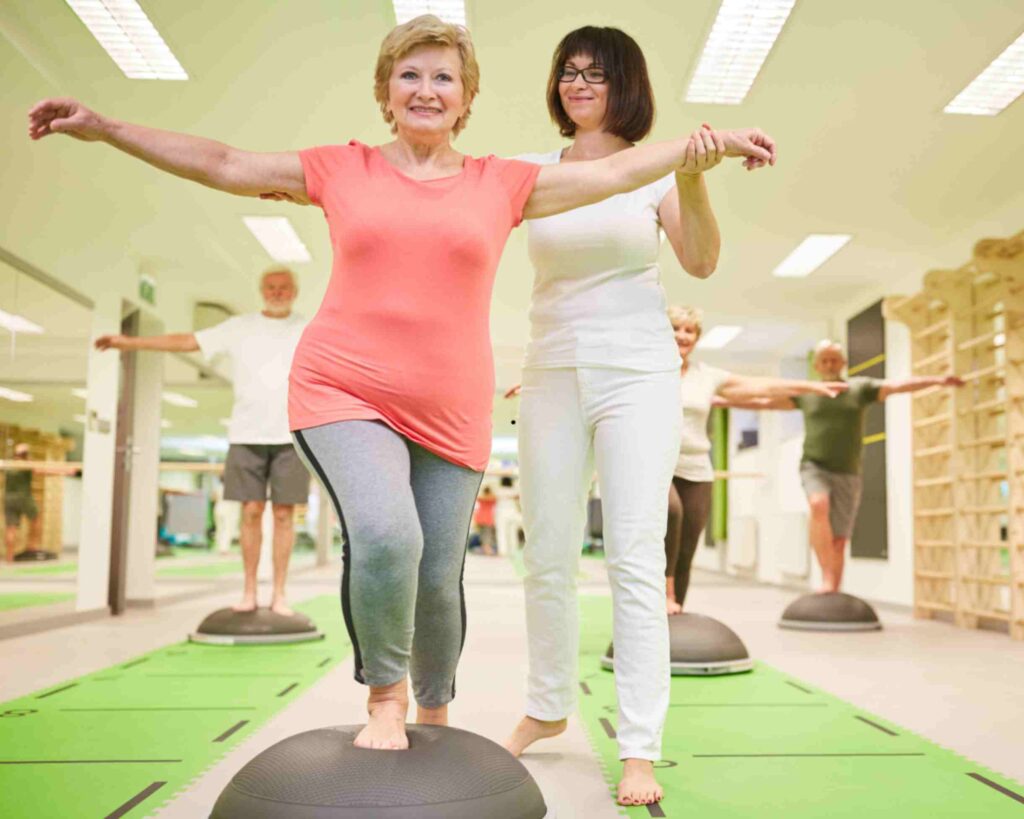
Balance is not a static trait lost with age—it is a dynamic skill that responds to daily movement and proper support. By integrating micro-balance routines into daily life and choosing an environment engineered for accessibility, seniors across the greater Chicago area can enjoy active, confident, and independent living.
Take the Next Step for Your Loved One
Are you or a family member exploring senior living for now in the Plainfield, Naperville, or Will County area?
- Location: 24700 Presidential Ave, Plainfield, IL 60544
- Phone: (815) 556-2555
- Community: The Oasis of Plainfield — Independent Living, Assisted Living, & Memory Care

Neil Beltran 30 July 2026
Sources
Mayo Clinic Press. (2024, April 12). The power of neuroplasticity: How your brain adapts and grows as you age. https://mcpress.mayoclinic.org/healthy-aging/the-power-of-neuroplasticity-how-your-brain-adapts-and-grows-as-you-age/
Mehrlatifan, S., Fatahi, A., & Khezri, D. (2023). Biomechanics of gait in the elderly: A literature review. Asian Journal of Sports Medicine, 14(2), Article e135663. https://doi.org/10.5812/asjsm-135663