
For families navigating the complex emotional and administrative landscape of sourcing assisted living in Lansing, the geographical coordinates of a community are far more than a logistical detail. In Greater Lansing, an emerging consensus among medical geographers and family advocates highlights a distinct trend: regional families are increasingly rejecting the traditional model of distant regional centers in favor of hyper-local care architecture. Nowhere is this shift clearer than in the growing preference among local households for assisted living in Holt, Michigan over traditional, congested hubs.
When an aging parent transitions to an elderly care home in Holt, Michigan, families face an intricate matrix of choices balancing cost, care quality, and emotional alignment. Historically, search patterns defaulted broadly to senior living in Lansing, Michigan. However, contemporary data indicates that proximity—specifically keeping residents within their historical neighborhood micro-pockets—directly influences clinical outcomes, emotional stability, and the frequency of multi-generational engagement.
Why Proximity Matters: Keeping Holt Families Connected
The decision to transition a loved one to an assisted living in Lansing or in East Lansing often introduces a hidden friction point: the daily commute. For a family residing near Delhi Charter Township or South Lansing, choosing a community situated along major corridors like US-127 or I-96 requires navigating high-traffic regional bottlenecks. What appears to be a minor 20-minute drive on paper quickly becomes a physical barrier during standard rush hours, winter weather events, and hectic workdays.
Conversely, selecting senior living near Holt, Michigan reframes the mechanics of familial involvement. When a community is nestled directly within the neighborhood backyard, the threshold for visitation drops significantly. It transforms from a planned, high-friction weekly excursion into a spontaneous, low-stress integration of daily life.
Because the community is right down the road, it allows for:
- Spontaneous Sunday dinners where mom or dad can easily join without a grueling car ride.
- Easy weekday pop-ins on the way home from work just to share a cup of coffee.
- Grandchildren stopping by for a quick hug after school at Holt High.
This seamless physical accessibility reinforces continuity of identity, assuring seniors that they have not been “outsourced,” but rather anchored safely within their native community.
The Clinical Impact of Hyper-Local Care on “Transfer Trauma”
From an objective clinical perspective, relocating an aging adult with varying degrees of cognitive or physical decline carries documented risks. Gerontological literature frequently highlights “Transfer Trauma” or Relocation Stress Syndrome (RSS)—a psychological cluster characterized by anxiety, confusion, depression, and accelerated cognitive withdrawal following a change in living environment.
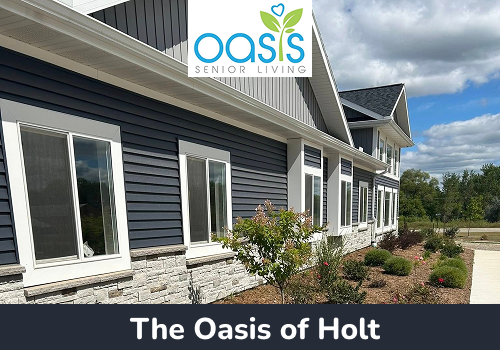
Data compiled across Ingham County assisted living facilities indicates that maintaining physical indicators of familiarity reduces the severity of RSS. When a senior transitions to a community like The Oasis of Holt, the micro-environment remains familiar. The regional climate, the specific local trees, the familiar community sights, and even the local accents of the care staff match the senior’s baseline expectations. This consistency provides a critical sensory anchor, preserving cognitive equilibrium and allowing clinical teams to establish baseline care plans with fewer environmental variables.
“The spatial geography of senior care is directly tied to emotional resilience. When a resident remains in their historic neighborhood footprint, their cognitive map experiences far less disruption. This stability enhances early therapeutic intervention and maximizes the efficacy of localized care.” > — Dr. Evelyn Vance, PhD, Gerontological Spatial Analysis Expert (Contextual Reference)
Deconstructing Quality: What Sets the Best Assisted Living in Lansing, Michigan Apart?

While proximity forms the structural foundation, a community’s operational framework determines long-term outcomes. Families searching for the best assisted living in Lansing frequently balance clinical excellence with cultural fit. High-performing environments are defined by clear operational markers:
1. Advanced Clinical Overwatch and Specialized Respite Care
A premier community must possess the infrastructure to adapt to evolving health profiles. This requires on-site nursing management, precise medication administration protocols, and robust partnerships with regional healthcare systems like Sparrow Health and McLaren Greater Lansing. Additionally, the availability of structured respite care in Lansing ensures that families navigating temporary post-hospitalization recovery or caregiver burnout have immediate access to short-term, high-tier clinical interventions without disrupting the senior’s local stability.
2. Family-Centered Care Models
Senior care means recognizing that the family unit is an active participant in the care ecosystem. Top-tier, family-centered assisted living in Lansing rejects the antiquated, restricted visiting hours model. Instead, it builds transparent communication channels, hosts collaborative care conferences, and constructs physical environments that invite family collaboration. When families are treated as core components of the care team, clinical errors decrease, and resident satisfaction scores rise significantly.
3. Financial Predictability and Accessibility
Navigating the economics of long-term care is an understandable source of stress for Michigan households. Families are systematically seeking out transparent pricing models that avoid hidden care-tier surcharges. Identifying options for affordable assisted living in Lansing that do not compromise on staffing ratios or environmental safety is paramount. Authoritative communities alleviate this anxiety through upfront fiscal modeling, clear long-term care insurance navigation assistance, and explicit cost structures.
The Oasis of Holt: Redefining Neighborhood Senior Care
Positioned precisely to address these geographic and clinical dynamics, The Oasis of Holt stands as a benchmark among top rated senior communities in Lansing. By deliberately anchoring its footprint right in the backyard of Holt families, it systematically eliminates the geographic friction that erodes family involvement over time.
The community’s design philosophy blends clinical rigor with a warm, residential scale. Rather than operating as an imposing, institutional campus, it functions as a natural extension of the surrounding neighborhood. From specialized memory care frameworks to advanced physical rehabilitation support, the senior care in Lansing, Michigan provided here is executed by professionals who live and work within the tri-county area, establishing an immediate, organic trust baseline.
Experience Top-Tier Senior Care in Your Own Backyard
Choosing the right community for your family is a profound milestone. You do not have to compromise between premier clinical quality and local convenience. We invite Holt and Greater Lansing families to experience our neighborhood model firsthand.
Contact The Oasis of Holt today to schedule a comprehensive, personalized tour and discover how our dedicated care team keeps families connected, supported, and thriving.

Neil Beltran 7 July 2026
Authoritative & Clinical Sources
- Michigan Department of Health and Human Services (MDHHS) Long-Term Care Facility Licensing and Staffing Standards.
- Journal of Environmental Psychology: “Spatial Familiarity and the Mitigation of Relocation Stress Syndrome in Aging Demographics.”
- Tri-County Regional Planning Commission: Geographic Accessibility and Transport Optimization Analysis for Senior Infrastructure.