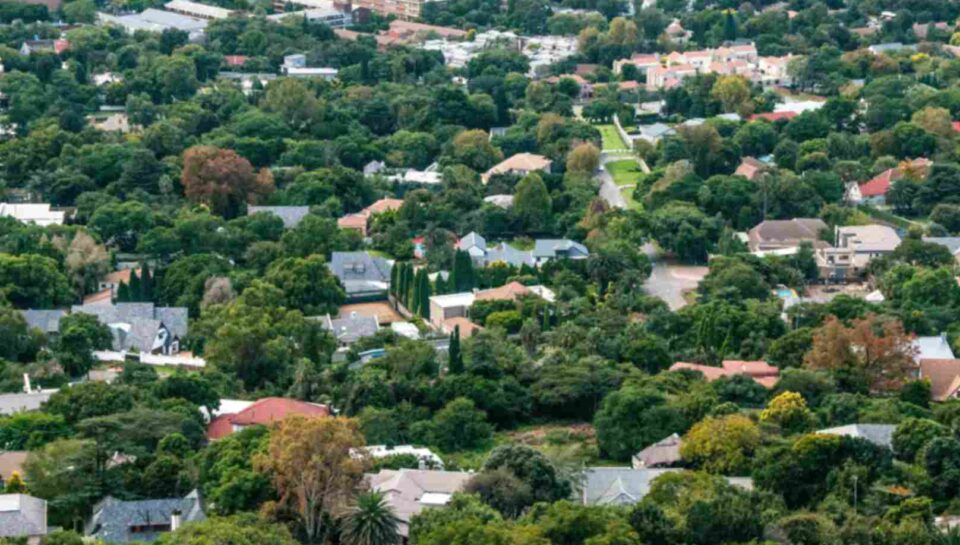
When families begin searching for a suburban senior living or the best senior care facilities in Metro Detroit, they are often confronted with a major architectural and environmental crossroads. Should they opt for a modern, multi-story urban high-rise in a bustling city center like downtown Detroit or Chicago, or is a sprawling suburban campus better suited for their loved one’s long-term health?
At first glance, city complexes might seem convenient. However, emerging research in environmental gerontology and clinical spatial design suggests that the physical constraints of dense, urban environments can actively work against a senior’s well-being.
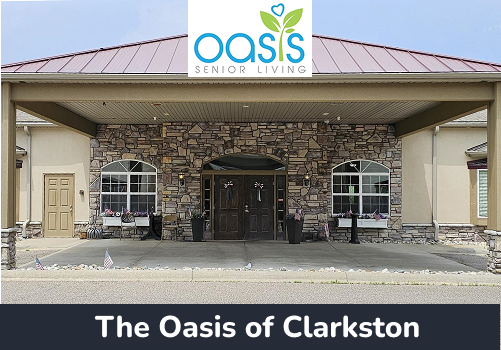
For families seeking senior living in Oakland County, MI, communities like The Oasis of Clarkston are proving that a nature-integrated, single-story suburban layout offers a vastly superior environment for clinical safety, cognitive health, and overall quality of life.
1. The Hidden Cost of the Sky-Rise: Urban Sensory Overload
For years, urban planners and geriatricians have studied the impact of urban sensory overload on senior cognitive health. City-center facilities are almost always vertically oriented due to real estate constraints. While high-rise living works well for young professionals, it introduces severe friction points for aging adults.
The Spatial Friction of Vertical Living
In a multi-level urban building, a resident’s daily life is dictated by elevators, narrow hallways, and concrete views.
- Elevator Bottlenecks: Waiting for elevators can induce anxiety, limit spontaneous mobility, and create physical barriers for residents utilizing wheelchairs or walkers.
- Sensory Pollution: Dense city environments are plagued by traffic noise, sirens, and construction. For a senior—particularly one living with cognitive decline—this constant background noise is not just annoying; it is clinically disruptive.
- Lack of Natural Orientation: High-rise complexes often lack direct, level access to the outdoors. To touch grass or sit under a tree, a resident must navigate multiple elevator trips, keycard doors, and lobby areas, resulting in restricted physical mobility.
2. The Science of Silence: Environmental Gerontology and Anxiety
When evaluating clinical safety and spatial metrics in long-term care, clinical researchers frequently look at stress biomarkers. Studies show that seniors residing in high-noise urban areas experience chronically elevated baseline cortisol (the primary stress hormone) levels.
For seniors in memory care, this physiological stress directly correlates with increased rates of sundowning, wandering, and agitation. Conversely, there are profound benefits of quiet environments for dementia care.
Research Insight: According to environmental gerontology studies, immediate, barrier-free access to peaceful outdoor areas—such as landscaped courtyards, walking paths, and water features—significantly reduces geriatric anxiety. The sensory input of nature (wind, water, birdsong) acts as a non-pharmacological therapeutic intervention, stabilizing circadian rhythms and improving sleep quality.
At The Oasis of Clarkston, this science is put into practice daily. The campus features a tranquil koi fish pond, safe walking paths, and secured landscaped courtyards designed specifically to encourage therapeutic outdoor exploration without the stress of urban noise pollution. This represents the role of nature-integrated campuses in reducing geriatric anxiety in its most practical, lived form.
3. Spatial Design and Clinical Safety: The Single-Story Blueprint
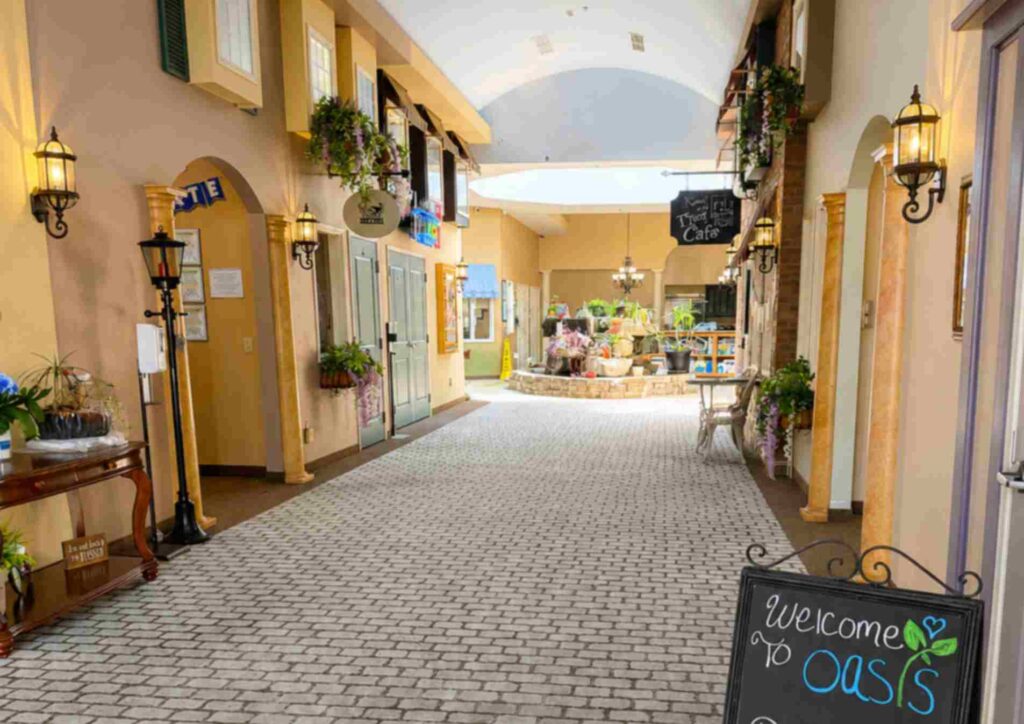
For families exploring assisted living options near Pontiac, MI, safety is usually the number-one priority. This is where senior living spatial design safety becomes a critical deciding factor.
The Oasis of Clarkston was built from the ground up to address the physical vulnerabilities of aging. Unlike towering city facilities, both the boutique Assisted Living neighborhood and the specialized, standalone memory care in Detroit suburbs offered by Oasis are entirely single-story layouts.
| Spatial Metric | High-Rise Urban Facilities | The Oasis of Clarkston (Suburban) |
| Vertical Navigation | High reliance on elevators & stairs | Zero. Flat, single-story layouts throughout. |
| Wandering Risks | High risk of elopement through fire stairs/complex exits | Low. Secure, circular indoor pathways with keypad security. |
| Outdoor Access | Escorted only, balconies, or rooftop terraces | Direct. Level access to secure courtyards & gardens. |
| Sensory Environment | High decibel city noise, artificial lighting | Quiet. Abundant natural light, scenic outdoor views. |
By eliminating stairs and elevators, the single-floor design dramatically reduces the risk of falls—the leading cause of injury among older adults. In the dedicated memory care neighborhood, the circular pathways allow residents to walk freely and satisfy their natural urge to explore without encountering frustrating dead-ends or hazardous stairwells.
4. Value-to-Care Ratios in Southeast Michigan
Beyond clinical outcomes, families must also navigate the realities of eldercare financing. A comparative analysis of value-to-care ratios in Southeast Michigan reveals a stark difference between urban real estate pricing and suburban senior communities.
When conducting an assisted living cost comparison in Michigan, metropolitan centers often carry premium price tags driven by high real estate acquisition costs, rather than the actual quality of care provided.
- The Urban Premium: Families pay premium rates for smaller, apartment-style rooms in high-rises where staff-to-resident ratios are often stretched across multiple floors.
- The Oasis Advantage: By choosing a suburban setting like Clarkston, families benefit from an all-inclusive pricing model that delivers spacious studio and grand suite accommodations, specialized memory programming, and direct access to expansive outdoor amenities.
Because the staff at The Oasis operates on a single level, care response times are faster, supervision is more consistent, and the value-to-care ratio is significantly maximized. Families receive premier, personalized clinical care that is physically and financially impossible to duplicate in a cramped city skyscraper.
Finding a True Oasis Close to Home
Choosing where your loved one will spend their next chapter is a profound decision. While the energy of the city has its place, the clinical, emotional, and physical safety benefits of a quiet, single-story suburban community are unmatched.
If you are currently looking for senior care, discover how The Oasis of Clarkston merges cutting-edge environmental safety with the warmth of a home-like neighborhood.

Neil Beltran 16 July 2026
Sources
Niewijk, G. (2024, August 19). Declining senses can impact mental health and loneliness in aging adults. UChicago Medicine. https://www.uchicagomedicine.org/forefront/research-and-discoveries-articles/declining-senses-and-mental-health
Burke, R. E., & Werner, R. M. (2019). Quality measurement and nursing homes: Measuring what matters. BMJ Quality & Safety, 28(7), 520–523. https://doi.org/10.1136/bmjqs-2019-009447
Hearts for Dementia. (2024, December 4). The impact of a calm environment on persons with dementia. https://heartsfordementia.com/news/the-impact-of-a-calm-environment-on-persons-with-dementia/