


For many older adults in Metro Detroit trying to protect aging joints, the golden standard of staying active has long been defined by a single, ambitious goal: hitting a grueling daily step count in one go. We have all seen it—or perhaps helped a loved one try to achieve it.
Picture an active senior living in Oakland County, determined to preserve their health, setting off on a long, continuous trek along a paved trail. They push through the discomfort, determined to reach that continuous mile or high step-target, only to return home with swollen knees, aching hips, and a lingering sense of defeat. Instead of feeling energized, they are forced to spend the next two days recovering on the couch with an ice pack.
This scenario represents a deeply ingrained but scientifically outdated myth: to stay strong, we must walk far and all at once. Recent orthopedic and biomechanical research has completely shifted this paradigm. For seniors looking to maintain their independence, walking for joint pain in seniors is not about endurance; it is about frequency.
Understanding how to protect aging joints through the power of “micro-movements” can help your loved family member stay mobile, balanced, and active without the wear and tear of long-distance strain.
The Science of the “Sponge Effect”: Why Joint Lubrication Relies on Micro-Movements
To understand why continuous long-distance walking can backfire, we have to look closely at the impact of walking frequency vs. duration on articular cartilage wear.
Unlike muscles or other organs, articular cartilage—the protective, slippery cushion at the ends of our bones—does not have its own direct blood supply. It cannot simply pull oxygen and nutrients straight from the bloodstream. Instead, cartilage relies on a mechanical process known as the “sponge effect” to stay healthy.
When we bear weight, the cartilage in our joints compresses, squeezing out cellular waste products. When we release that weight, the cartilage expands, acting like a sponge to suck in nutrient-rich synovial fluid from the surrounding joint capsule.
The Biomechanics of Joint Overload
The joint requires a rhythmic cycle of compression and release to stay lubricated. However, this process has a tipping point:
- The Threshold of Structural Fatigue: In the aging joint, the cartilage is thinner and the synovial fluid is naturally less viscous.
- Biomechanical Load Distribution in the Geriatric Knee: During a long, continuous walk, the muscles stabilizing the knee and hip eventually fatigue. When these muscles tire, they stop absorbing impact, transferring the full force of every step directly onto the worn cartilage.
- Micro-Tears and Inflammation: Instead of lubricating the joint, a long walk can cause micro-tears in vulnerable cartilage, leading to pain and swelling.
Conversely, interval walking benefits for older adults leverage shorter, more frequent bouts of movement. These brief “micro-movements” trigger the sponge effect, bathing the joint in fresh synovial fluid without reaching the point of muscular fatigue or joint overload. Research indicates that downregulating chronic osteoarthritic inflammation through micro-movements is highly effective because it prevents the inflammatory cascade triggered by overexertion.
Comparison: Long Walks vs. Frequent Micro-Walks
| Feature | One Long, Continuous Walk (e.g., 45 mins) | Frequent, Short Walks (e.g., 3 x 10–15 mins) |
| Joint Lubrication | Exhausts synovial fluid protection over time | Cycles fresh synovial fluid continuously |
| Muscle Fatigue | High; leads to poor biomechanical alignment | Low; keeps stabilizing muscles fresh |
| Impact on Bad Knees | Often increases pain and swelling | Protects cartilage and reduces pain |
| Core Outcomes | Exhaustion, recovery downtime | Improving balance and mobility in seniors |
Designing Exercise Programs for Seniors with Bad Knees
If your family is looking into exercise programs for seniors with bad knees, the medical consensus is clear: transition from “marathon” sessions to intentional, daily intervals.
A highly effective routine for an older adult might look like a 10-minute stroll after breakfast, another 10-minute walk to mail a letter in the afternoon, and a final 10-minute walk after dinner. This split routine yields the exact same cardiovascular and metabolic benefits as a continuous 30-minute walk, but with virtually none of the joint degradation.
Over time, this pacing builds vital strength in the quadriceps and glutes. Stronger stabilizing muscles naturally improve mobility, balance, and independence, reducing the risk of devastating falls while keeping cardiovascular health in peak condition.
The Local Standard: Fostering Active Lifestyles at The Oasis of Holly
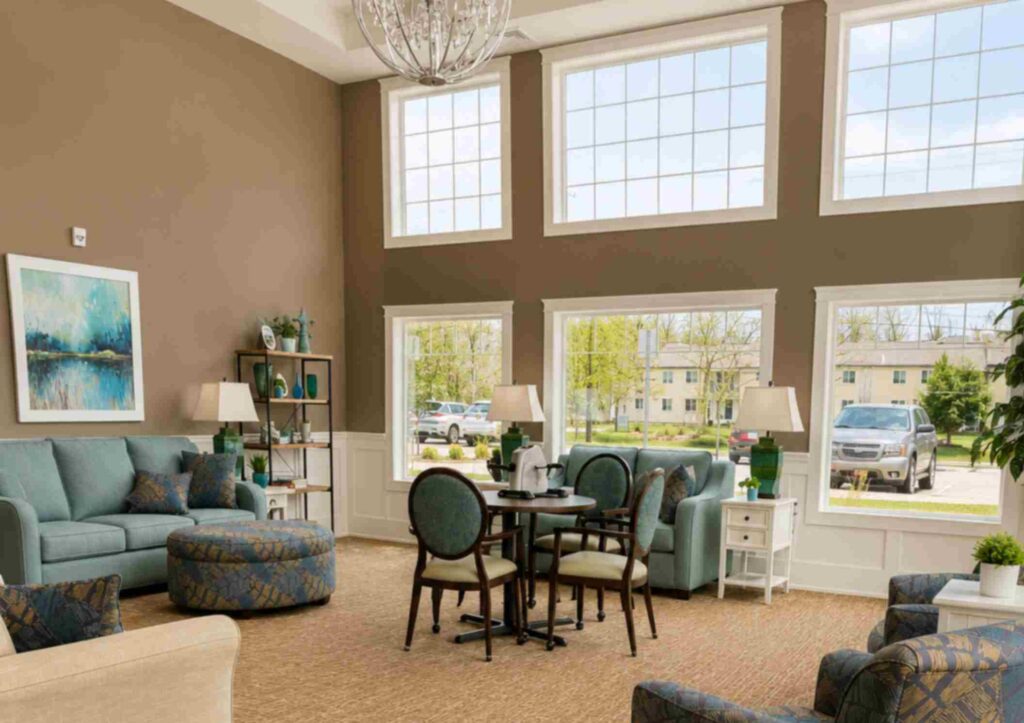
Transitioning to a safer, interval-based lifestyle can be difficult for seniors living alone in traditional homes. Maintaining a routine of multiple short walks throughout the day requires an environment designed with safety, accessibility, and community in mind.
This is exactly where The Oasis of Holly excels. As a premier destination for those researching assisted living communities in Metro Detroit and memory care communities in Metro Detroit, this community is physically and socially engineered to make healthy movement effortless.
“At The Oasis of Holly, we don’t expect seniors to walk miles at a time to stay healthy. Instead, we have woven safe, natural micro-movements directly into the fabric of daily life.”
Architectural Design That Encourages Micro-Movements
The campus at The Oasis of Holly is designed to eliminate the physical barriers that often discourage seniors from staying active:
- Tranquil, Purpose-Built Paths: Beautifully landscaped walking paths loop gently through the grounds. Residents can take a short, level walk to the tranquil memorial pond to watch the water, rest on a nearby bench, and walk back—getting a perfect dose of joint-lubricating movement without overexertion.
- Inviting Central Courtyards: The secure outdoor courtyards offer flat, smooth, and safe spaces for residents to step outside, enjoy the fresh air, and engage in short, spontaneous walks.
- Specialized Wellness Programming: Through dedicated recreational therapy senior living in Michigan, residents have access to guided movement programs tailored specifically to their physical limits. Staff members are always nearby to assist, encouraging residents and ensuring that fostering active senior lifestyles in North Oakland County communities remains a safe, daily reality.
Choosing the Right Environment for Longevity and Independence
If you are currently looking at options for senior living in Oakland County for a loved one, it is vital to look beyond basic care plans. The physical environment plays a massive role in whether a senior will preserve their physical freedom or gradually lose it to joint pain and fear of falling.
By choosing a community like The Oasis of Holly, families can rest easy knowing that their loved ones are in an environment that naturally supports their physical well-being. Here, joint health, cardiovascular vitality, and everyday independence are supported by compassionate experts, beautiful surroundings, and the latest scientific insights into healthy aging.

Neil Beltran 16 July 2026
Sources
Mayo Clinic Staff. (2023, January 5). Exercise helps ease arthritis pain and stiffness. Mayo Clinic. https://www.mayoclinic.org/diseases-conditions/arthritis/in-depth/arthritis/art-20047971
Stanford University. (2025, August 12). Study reveals gait retraining could help treat knee osteoarthritis. Stanford Report. https://news.stanford.edu/stories/2025/08/gait-retraining-knee-osteoarthritis-cartilage-damage-treatment-walking