
The decision to transition an aging parent or loved one into a Ingham County senior living is rarely purely logistical; it is an emotional paradigm shift. For families exploring assisted living in Holt, Michigan, the process is frequently clouded by an unvoiced fear: that choosing a managed care setting means trading a loved one’s individuality for clinical institutionalism. The traditional, large-scale facility model often enforces rigid, shift-based schedules that can leave seniors feeling like a room number rather than a human being.
However, a structural evolution in gerontological care is changing this narrative. Leading eldercare advocates and clinical psychologists argue that the highest standard of long-term wellness is achieved not in sprawling, sterile complexes, but within boutique, high-warmth environments. By deliberately capping community scale, senior care in Holt, Michigan is establishing a new benchmark—proving that robust clinical safety and personal liberty can coexist beautifully.
Evaluating Person-Centered Care Models in Michigan Senior Living
To understand why some seniors flourish after transitioning to senior living while others experience a decline in vitality, families must look closely at the operational philosophy of the community especially for Ingham County senior living. In recent years, the Michigan Department of Health and Human Services and progressive senior care advocates have heavily emphasized person centered care for elderly populations over traditional task-oriented scheduling.
| Operational Element | Task-Oriented Facility Model | Person-Centered Boutique Model |
| Daily Routine Construction | Rigid, staff-centric windows (e.g., all residents awakened by 7:00 AM). | Dynamic, habit-centric choices (e.g., respecting a resident’s lifelong history as a night owl). |
| Caregiver Allocation | Rotating, large-pool shift work with minimal personal continuity. | Primary/Consistent Assignment staffing that fosters deep behavioral familiarity. |
| Dining Autonomy | Fixed, institutional meal hours with pre-plated, uniform options. | Flexible, chef-led culinary service that honors individual palates and nutrition goals. |
| Environmental Footprint | Multi-story, complex layouts requiring elevator navigation and long corridors. | Single-story, micro-neighborhood designs that naturally encourage independent wandering. |
When learning how to maintain senior independence in assisted living, families should reject communities that force residents to adapt to the facility’s schedule. True dignity in senior care options manifests when the facility adapts entirely to the resident.
Balancing Senior Autonomy and Safety in Assisted Care
One of the greatest operational friction points in Ingham County senior living is the delicate equilibrium between resident liberty and clinical oversight. In vast, multi-story institutions, maximizing senior safety in assisted living communities often translates to restrictive protocols that inadvertently stifle a senior’s personal freedom, leading to a phenomenon known as “forced dependence.”
Clean Horizontal Chain: Rigid Rules ➔ Decreased Movement ➔ Muscle Atrophy ➔ Increased Fall Risk
Clinical data from the Journal of Housing for the Elderly indicates that over-restricting a senior’s movement under the guise of safety frequently backfires. When a resident’s independent mobility is curtailed, accelerated muscle atrophy and spatial disorientation follow, ultimately increasing their statistical fall risk.
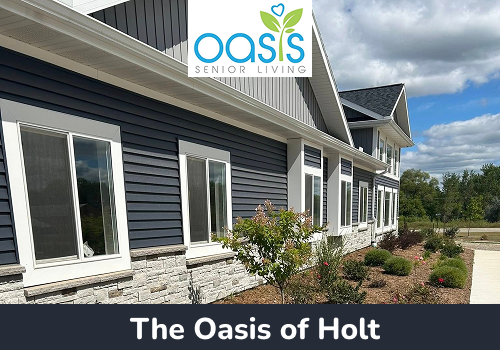
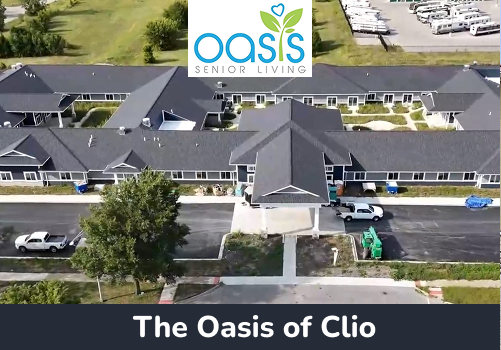
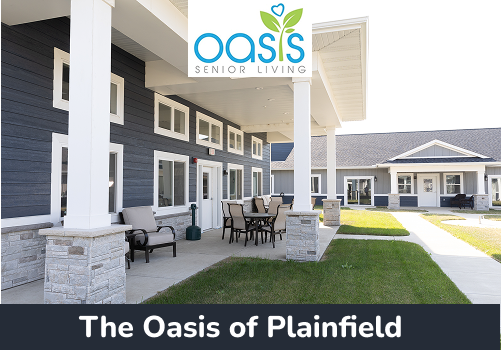
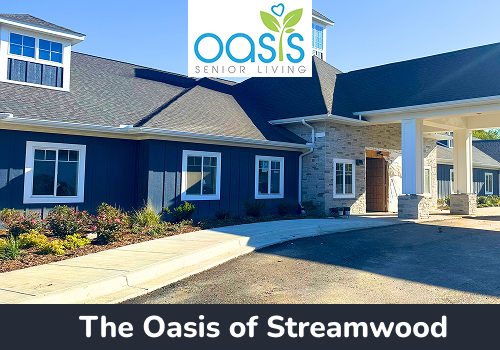
The Oasis of Holt resolves this tension through architectural and cultural engineering. Built as a single-story, boutique footprint, the community eliminates the physical and psychological barriers of stairs and elevator banks. This allows residents to self-navigate between private suites, open-concept living spaces, and secure outdoor courtyards for families looking for the best Ingham County senior living. Safety is maintained not through locked doors or physical restrictions, but through a high staff-to-resident ratio that allows discreet, proactive overwatch. Residents retain the dignity of choice—deciding when to walk, garden, or socialize—while remaining fully enveloped in a secure clinical safety net.
The Impact of Personalized Daily Care on Senior Mental Health

The physiological benefits of customized routines are directly mirrored in psychological outcomes. A landmark study published by the American Psychological Association explored the impact of personal control on institutionalized older adults. The data revealed that seniors given control over minor daily decisions—such as arranging their room layout, selecting their breakfast time, or choosing their social activities—demonstrated a significant drop in systemic cortisol levels and scored radically higher on baseline emotional well-being metrics.
At The Oasis of Holt, this research forms the cornerstone of daily operations. Because the community maintains intimate, boutique-scale neighborhoods, caregivers are not rushed through a checklist of tasks. They have the temporal real estate to build genuine, reciprocal relationships.
The Oasis of Holt: Customized Well-Being Cycle
| Cycle Component | Tailored Daily Practice | Long-Term Psychological & Health Outcome |
| Lifelong Habits | • Fluid, natural wake times. • Personalized, choice-driven dining. | Preserves Autonomy: Honors a senior’s personal history, keeping them in control of their day-to-day rhythm. |
| Emotional Grounding | • Facilitating genuine friendships. • Maintaining low-stress environments. | Reduces Anxiety: Lowers systemic cortisol levels, fostering a deep sense of belonging and peace of mind. |
| Cognitive Preservation | • High neural and social engagement. • Lower baseline dementia progression. | Sustains Vitality: Uses familiar daily habits as active non-pharmacological tools to guard brain health. |
If a resident spent fifty years waking up at 5:30 AM to read the newspaper with a black coffee, the culinary and care teams at The Oasis honor that lifelong rhythm. This continuity of habit provides critical emotional grounding. For seniors navigating early to mid-stage cognitive changes, preserving these familiar daily rituals is a vital non-pharmacological intervention that helps slow the progression of memory decline.
The Local Standout: Why The Oasis of Holt is the Best Assisted Living in Ingham County
Ultimately, the exceptional quality of care at The Oasis of Holt boils down to an unwavering commitment to family confidence for Ingham County senior living. When a senior community feels like a warm, neighborhood home rather than a medical ward, the psychological burden on families melts away. Spontaneous visits increase, communication between families and nursing staff becomes transparent, and the care journey transforms into a true partnership.
By pairing rigorous clinical overwatch—including on-site nursing, precise medication administration, and coordinated care with regional health networks—with an unyielding respect for personal dignity, The Oasis of Holt stands out as a premier senior community in Mid-Michigan. It offers families the ultimate peace of mind: knowing that their loved one is entirely safe, deeply respected, and empowered to live life on their own terms.
Experience True Person-Centered Assisted Living
Choosing the right Ingham County senior living is a journey that deserves personal attention and an eye-witness perspective. We invite you to experience the warmth of our boutique community firsthand.
Contact The Oasis of Holt today to schedule a comprehensive, personalized tour and discover how our dedicated team preserves independence and brings peace of mind to local families.

Neil Beltran 7 July 2026
Authoritative Reference Context
- Michigan Department of Health and Human Services (MDHHS): Quality Standards and Resident Rights in Adult Foster Care.
- Journal of Applied Gerontology: “The Measurable Impact of Autonomy and Personal Choice on Depression Scores in Assisted Living Environments.”
- The Center for Health Design: Architectural Footprints and Their Direct Correlation to Fall Prevention in Older Demographics.