When a loved one in their late 70s or 80s exhibits sudden fog, acute irritability, or unexpected unsteadiness on a warm July afternoon, family caregivers often assume the worst in senior vitality in Michigan. Is it a sudden dip in cognitive function? A rapid progression of underlying dementia?
Frequently, clinical evaluation reveals a much more straightforward—yet critically underdiagnosed—catalyst: subclinical dehydration and electrolyte imbalance in geriatric renal health.
As Michigan summers become increasingly warm, maintaining adequate fluid balance transforms from a simple lifestyle tip into a vital daily clinical intervention. For adult children researching memory care communities in Oakland County and high-level assisted living options, understanding the biological chain reaction of dehydration is essential to protecting senior cognitive clarity, mood stability, and cardiovascular health.
The Biological Hook: Why Aging Bodies Lose Their Water Reserves
Understanding why older adults are acutely vulnerable to heat requires looking at physiological changes in the aging body:
1. Reduced Fluid Capacity
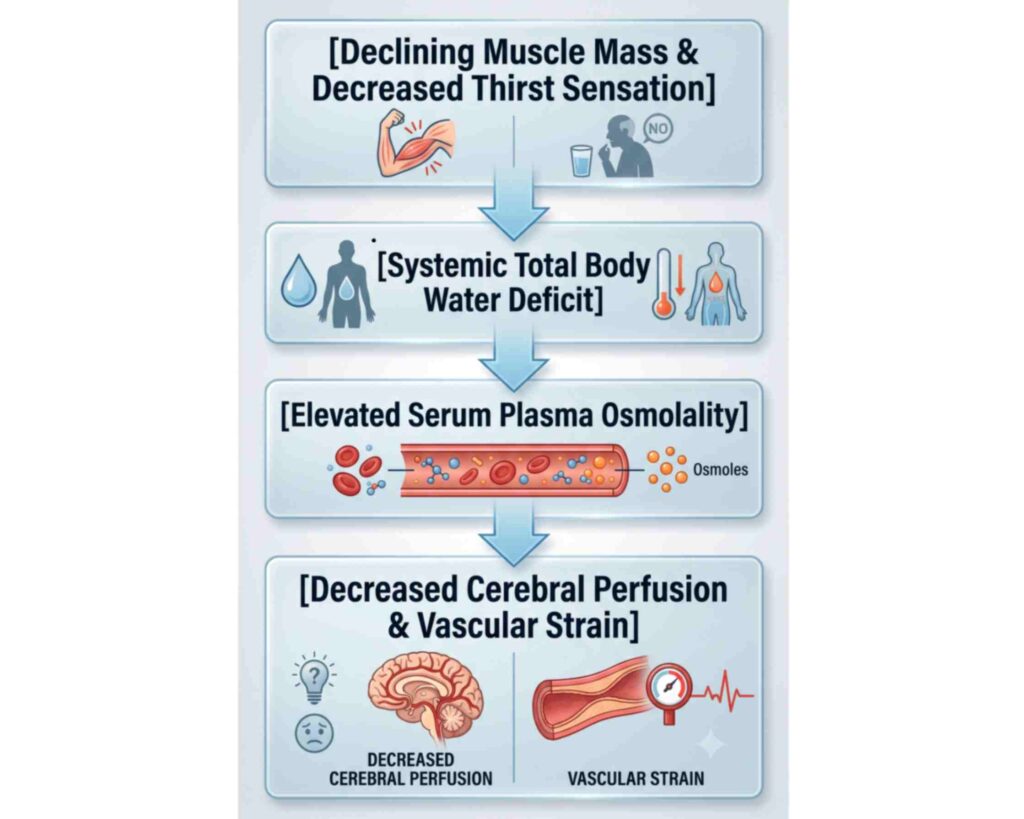
In early adulthood, total body water accounts for roughly $60\%$ of total body weight. By age 70, due to natural reductions in skeletal muscle mass (sarcopenia) and shifts in tissue composition, that reserve drops closer to $45\text{–}50\%$. Older adults simply possess a smaller internal water reservoir to cushion against heat loss.
2. Blunted Thirst Reflex
In healthy young adults, elevated blood concentration (high plasma osmolality) immediately triggers hypothalamic thirst receptors. In seniors, this neurochemical alert system becomes blunted. By the time an older adult actually feels thirsty, they are already experiencing mild to moderate hypohydration.
3. Geriatric Renal Shift
The aging kidney experiences a gradual decline in the glomerular filtration rate (GFR) and loses some of its capacity to concentrate urine and retain essential sodium and potassium ions.
Clinical Insight: A drop of just $1\text{–}2\%$ in total body water can significantly decrease cerebral blood flow (cerebral perfusion). In older adults, this reduced blood supply to the brain rapidly degrades cognitive processing speed, triggers sudden executive dysfunction, and creates “pseudodementia”—reversible confusion directly linked to dehydration rather than neurological decline.
The Vascular Chain Reaction: Blood Pressure, Viscosity, and Mood
Hydration status directly regulates circulatory health and emotional balance.
Plasma Viscosity and Cardiovascular Strain
When fluid volume drops, plasma osmolality spikes. Blood literally becomes thicker—a condition known as increased plasma viscosity. The heart must work substantially harder to pump this viscous fluid through aging blood vessels, worsening systemic hypertension, triggering orthostatic drops in blood pressure upon standing, and increasing the risk of transient ischemic events.
Fluid Balance and Geriatric Renal Health
The kidneys rely on a steady flow of well-hydrated blood to flush out metabolic waste products like urea and creatinine. When hypohydration occurs, renal blood flow plunges, forcing the kidneys to work under hypoxic conditions. Proactively mitigating subclinical dehydration and electrolyte imbalance in geriatric renal health is one of the most effective natural ways to boost kidney health in seniors.
Dehydration and Emotional Regulation
The human brain depends on a tight balance of electrolytes across cell membranes to synthesize and regulate neurotransmitters like serotonin and dopamine. Even mild dehydration in elderly cognitive clarity metrics correlates directly with heightened anxiety, agitation, sudden apathy, and uncharacteristic anger—symptoms frequently misinterpreted as behavioral progression in cognitive conditions.
| Hydration Level | Physiological Impact | Clinical Manifestation |
| Optimal Fluid Balance | Normal plasma osmolality; steady cerebral perfusion | Sharp executive processing, steady gait, stable mood |
| 1–2% Dehydration | Elevated plasma viscosity; microvascular stress | Short-term memory lapses, irritability, mild fatigue |
| 3% + Dehydration | Renal hypoperfusion; significant cerebral blood flow reduction | Acute confusion (pseudodementia), delirium, orthostatic hypotension |
The Michigan Summer Factor: Why Local Context Matters
While Southeastern Michigan is famous for its lakes and verdant summers, high humidity levels in Oakland and Genesee counties reduce the body’s cooling efficiency through sweat evaporation.
Older adults taking common cardiac medications—such as diuretics for high blood pressure, ACE inhibitors, or beta-blockers—face a compounded risk. Diuretics encourage fluid excretion, while summer heat accelerates fluid loss. Without intentional seasonal wellness protocols in Oakland County senior living, summer heat can silently push seniors into chronic, low-grade dehydration.
The Culinary & Care Reality at The Oasis of Clarkston
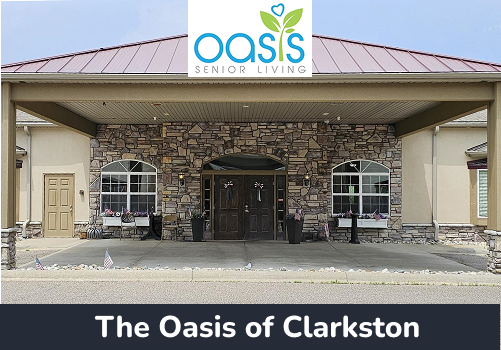
Recognizing dehydration as a clinical priority rather than a casual routine requires an environment built around proactive care. Nestled off Dixie Highway, The Oasis of Clarkston integrates medical research directly into daily life for both assisted living and specialized memory care residents.
Chef-Prepared Hydration Protocols
Rather than relying solely on standard water glasses, the culinary team at The Oasis crafts delicious, high-fluid menu strategies. Utilizing local Michigan produce—such as fresh summer berries, crisp cucumbers, and water-rich stone fruits—dining experiences naturally support hydration. Infused waters featuring citrus, mint, and watermelon are placed continuously throughout common living spaces to invite effortless sipping.
Clinical & Caregiver Oversight
The Oasis team monitors health parameters to catch subclinical hydration drops before they escalate into acute delirium or urinary tract complications. Staff actively encourage fluid intake during group activities, patio gatherings, and specialized cognitive programming.
Designed Outdoor Sanctuaries
Residents enjoy Michigan’s vibrant summer weather without heat exhaustion. The shaded outdoor courtyards and patio spaces at The Oasis of Clarkston allow seniors to take in the fresh air, tend to garden beds, and socialise while staying protected from intense sun exposure.
Recognizing the Early Signs of Dehydration in Loved Ones
When visiting an aging parent this summer, look beyond basic physical markers like dry skin or chapped lips. Watch for subtle functional shifts that signal fluid loss:
- Sudden baseline shifts in memory: Difficulty recalling familiar names or following simple conversations.
- Postural instability: Unsteadiness when rising from a favorite armchair or chair.
- Darkened urine output: A primary indicator of concentrated renal waste.
- Uncharacteristic mood changes: Increased apathy, unexpected anxiety, or heightened irritation during routine afternoon tasks.
Recognizing these symptoms early allows families to respond quickly, mitigating health risks through proper fluid balance and supportive care.
Experiencing Wellness at The Oasis of Clarkston
Maintaining health, vascular vitality, and cognitive clarity in later life requires specialized attention, intentional dining, and a supportive environment. At The Oasis of Clarkston, senior wellness is prioritized through chef-prepared nutrition, peaceful courtyards, and dedicated assisted living and memory care teams.
If you are exploring senior living options in Oakland County or looking for a supportive environment for a family member, we invite you to experience our community firsthand.
Contact The Oasis of Clarkston Today!! 📍 7550 Dixie Hwy, Clarkston, MI 48346
📞 Call to schedule your personalized tour and learn how our seasonal wellness protocols support resident vitality year-round.

Neil Beltran 7 August 2026