
For families navigating Michigan memory care in Greater Lansing, searching for specialized care can feel overwhelming. When a loved one is diagnosed with Alzheimer’s or another form of dementia, adult children and spouses often search for answers, encountering alarming industry jargon like “secure units” or “lockdown wards.”
True, high-quality senior living memory care in Holt, Michigan is not about isolation or restraint. Modern dementia care represents a fundamental shift toward purpose-built environmental psychology, evidence-based therapy, and compassionate, individual-centered care.
When evaluating dementia care communities in Ingham County, Michigan, understanding the science behind cognitive support—and seeing how that science is implemented daily—is key to making an informed choice for your family. Here is a closer look at what clinical memory care standard should look like and how The Oasis of Holt puts these evidence-based principles into practice every day.
1. Beyond the Myth of the “Lockdown Unit”: Reimagining Environmental Design
Historically, memory care units were retrofitted hospital floors equipped with locked doors and fluorescent lighting. Modern clinical research shows that rigid, clinical environments can actually increase cognitive fatigue, agitation, and disorientation.
The Impact of Environmental Design on Dementia Agitation and Wandering
Environmental psychology plays a critical role in managing neurodegenerative diseases. According to research published by the National Institutes of Health (NIH) on dementia-friendly architecture:
- Barrier-Free Navigation: Single-story layouts with continuous, circular pathways significantly reduce frustration by eliminating dead ends that trigger anxiety or aggressive reactions in disoriented seniors.
- Visual Anchor Cueing: Contrast-rich wall cues and personalized entryways help residents identify their private living spaces independently, maintaining autonomy.
- Sensory Architecture: Natural lighting, acoustic dampening, and access to secure outdoor green spaces help stabilize the circadian rhythm, directly mitigating severe restlessness and exit-seeking behaviors.
How The Oasis of Holt Implements This Standard
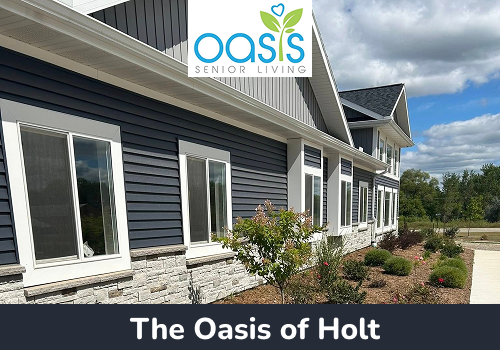
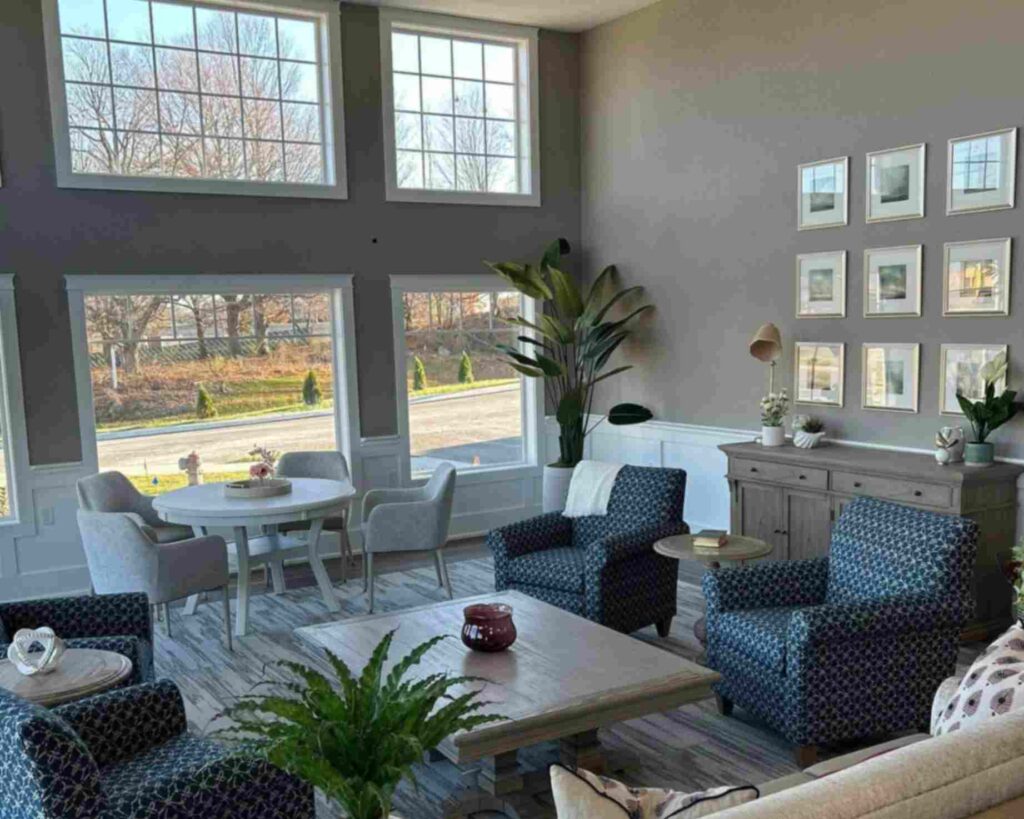
Located at 1761 Cedar Street in Holt, MI, The Oasis of Holt was designed around these exact principles. Rather than feeling institutional, the community offers barrier-free studio suites equipped with personalized memory boxes outside each doorway. These memory boxes contain familiar photos and cherished keepsakes, serving as clear visual anchors that guide residents home without frustration.
Furthermore, residents benefit from secure, landscaped outdoor courtyards and garden paths. Seniors can enjoy fresh air and sunshine safely, preserving their dignity and independence without compromising security or fall prevention.
2. The Science of the Afternoon: Managing “Sundowning” Without Over-Medication
One of the most complex clinical challenges families face is sundowning—a neurobehavioral phenomenon characterized by increased confusion, anxiety, and agitation late in the afternoon or early evening as daylight fades.
| Phase / Trigger | Clinical Impact | Behavioral Symptom | Evidence-Based Intervention |
| 1. Circadian Disruption | Internal body clock becomes desynchronized as natural light shifts. | Increased confusion, restlessness, and exit-seeking. | Structured Light & Acoustic Therapy Adjust indoor lighting to match circadian rhythms and lower ambient noise. |
| 2. Sensory Overload & Fatigue | Brain experiences mental exhaustion from processing continuous environmental noise/stimuli. | Irritability, overstimulation, and anxiety during late afternoon. | Low-Distraction Dining & Spaces Create quiet, low-stimulus environments during mealtime and shift transitions. |
| 3. Late-Afternoon Transition | Fading daylight triggers anxiety and loss of environmental grounding. | “Sundowning” agitation, emotional distress, or vocal agitation. | Certified Reminiscence Activities Anchor focus using comforting, familiar memories, classic music, and tactile prompts. |
Evaluating Clinical Standards in Michigan Memory Care Facilities
Leading clinical guidelines, including those from the Alzheimer’s Association, emphasize non-pharmacological interventions as the primary response to sundowning. Rather than relying heavily on sedating medications, high-standard communities utilize environmental adjustments:
- Circadian Rhythm Support: Adjusting indoor lighting throughout the day to mirror natural sunlight helps maintain body clock regulation.
- Acoustic Management: Reducing background noise, television static, and loud announcements during late afternoon hours prevents sensory overstimulation.
- Structured Rhythms: Transitioning into comforting, low-energy activities—such as guided reminiscence therapy or soothing acoustic music—helps ease the late-afternoon transition.
How The Oasis of Holt Delivers Relief
At The Oasis of Holt, managing sundowning is woven directly into the daily care routine. The community’s staff undergo specialized training through Certified Dementia Practitioner programs to recognize subtle sensory cues before agitation escalates.
During peak sundowning hours, staff facilitate calm, structured activities in low-stimulation environments. The community’s specialized dining spaces are designed to limit background distractions, allowing residents to enjoy calm evening meals with gentle cueing and support from 24/7 care associates and licensed nursing oversight.
3. Integrating Evidence-Based Cognitive Therapy into Daily Routines
Effective memory care extends beyond physical safety; it enriches cognitive health and preserves identity. When searching for the best memory care near Okemos, MI, families should examine whether a community’s activities are purely social or rooted in structured cognitive maintenance.
| Therapy Type | Scientific Goal | Daily Application at The Oasis of Holt |
| Reminiscence Therapy | Stimulates long-term memory pathways using tactile, auditory, and visual prompts. | Facilitated group sessions featuring familiar historical events, classic music, and personal keepsakes. |
| Sensory Stimulation | Engages tactile and auditory senses to reduce anxiety and anchor residents in the present moment. | Soothing tactile activities, aromatherapies, and quiet reflection spaces in dedicated therapy rooms. |
| Physical & Occupational Therapy | Maintains motor function, balance, and fine motor skills to reduce fall risks. | On-site physical, occupational, and speech therapy in custom-equipped wellness spaces. |
By integrating evidence-based cognitive therapy in daily senior routines, residents maintain their remaining abilities longer, experiencing genuine accomplishment and daily fulfillment.
4. Building Family Trust Through Transparency and Local Proximity
Choosing a memory care community is deeply emotional for families across Ingham County, Mason, East Lansing, and Greater Lansing. Restoring peace of mind requires finding a local team that acts as a true partner in care.
What sets person-centered dementia care in Michigan apart is the collaborative partnership between staff and families. At The Oasis of Holt, care begins with an in-depth life story assessment—learning about a resident’s past career, favorite hobbies, morning routines, and family history.
Why Location and Medical Proximity Matter
For local families, proximity provides both convenience and clinical reassurance:
- Emergency & Specialized Health Access: Located just minutes from major medical centers like McLaren Greater Lansing and Sparrow Hospital, residents have rapid access to acute care when needed.
- Comprehensive Care Services: With in-house primary care clinic visits, podiatry, and scheduled therapy services, residents receive comprehensive healthcare without the stress of frequent transport trips.
- Family Involvement: Situated near Aurelius Road and Cedar Street, families in nearby Okemos, Mason, and South Lansing can easily visit, participate in family support groups, or join loved ones in private dining rooms for special occasions.
What to Look for in a Memory Care Facility: A Checklist for Families
When touring local memory care solutions for Greater Lansing families, use this quick research guide to evaluate clinical and lifestyle standards:
- [ ] Physical Layout: Is the floor plan single-story, clear, and circular, preventing disorientation and dead-end frustration?
- [ ] Staffing Standards: Are caregivers specifically trained as Certified Dementia Practitioners or in specialized dementia protocols?
- [ ] Safety & Fall Prevention: Are bathrooms equipped with barrier-free, roll-in access, emergency response systems, and zero-threshold transitions?
- [ ] Cognitive Engagement: Does the community offer structured daily therapy programs (reminiscence, sensory engagement) rather than passive leisure activities?
- [ ] Sensory Environment: Is the space designed to dampen ambient noise and offer natural light to minimize sundowning?
Experience Person-Centered Memory Care in Ingham County
Navigating cognitive loss is a journey no family should walk alone. Real memory care means delivering safety through thoughtful architecture, cognitive health through evidence-based programming, and daily dignity through compassionate, expert care.
If you are evaluating options for a loved one in Greater Lansing, experience the difference in person.
The Oasis of Holt 📍 1761 Cedar Street, Holt, MI 48842
📞 Schedule a tour with their team to learn more about localized memory support and family resources.

Neil Beltran 7 August 2026