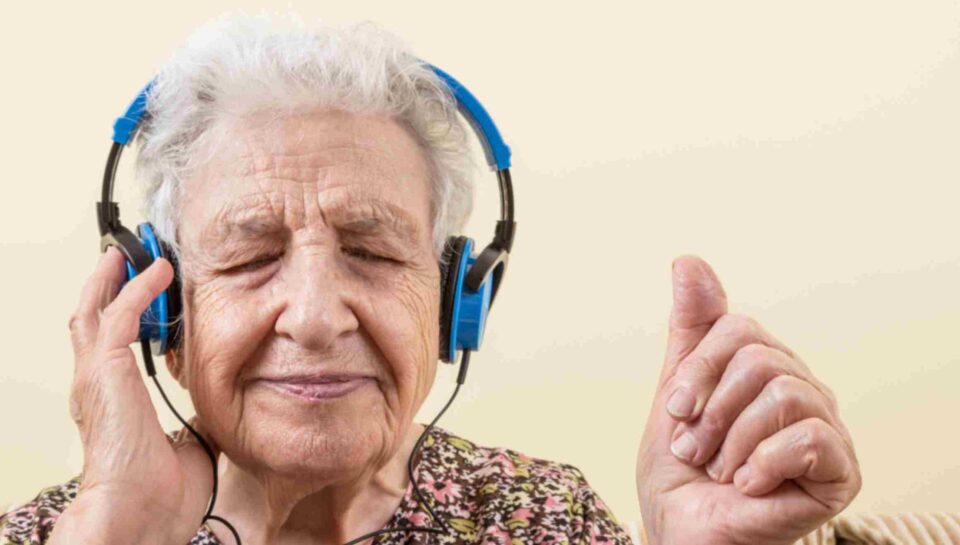
Safeguarding cognitive care for Michigan seniors has been vital for senior living. For generations of families along the West Michigan coastline, life has been defined by rhythm—the rhythmic crashing of Lake Michigan waves, the hum of festivals in Grand Haven, or the comforting melodies played at home. But as our parents and grandparents age, maintaining that internal vibrance becomes a core focus of family care.
When searching for the right senior care in Michigan, families often prioritize physical checklists: safety features, medication schedules, and nutritional plans. However, cutting-edge neurological research reveals that one of the most powerful tools for preserving cognitive health and emotional vitality is completely non-pharmacological.
It is the power of music.
Recent breakthroughs in neuroscience show that auditory engagement does more than just entertain—it radically alters the structural and chemical makeup of the aging brain. Here is a scientific look at how targeted sensory intervention is reshaping the landscape of holistic senior wellness programs in West Michigan.
The Neuroscientific Hook: Global Activation and Cognitive Reserve
To understand how music protects the aging mind, one must look at how the brain processes sound. While language processing is highly localized—primarily occupying the left hemisphere—musical processing demands an extraordinary, bilateral synchronization across the entire organ.
When an older adult listens to or participates in music, a massive influx of neural activity fires across both hemispheres simultaneously. Neuroimaging studies demonstrate that music engages a sweeping network:
- The Prefrontal Cortex: Responsible for executive functioning, decision-making, and focus.
- The Hippocampus: The central seat of memory formation and consolidation.
- The Amygdala: The nucleus responsible for emotional processing.
This expansive auditory network activation and executive functioning in older adults serves as a rigorous, full-brain workout. By routinely stimulating these divergent pathways, music builds what neurologists refer to as “cognitive reserve.”
Think of cognitive reserve as a structural backup system for the mind. When neurodegenerative conditions—such as Alzheimer’s disease or vascular dementia—attempt to damage standard neural pathways, a dense cognitive reserve allows the brain to recruit alternative networks. This resilience effectively delays the onset of cognitive decline, keeping the mind sharper for longer.
Acoustic Neurogenesis: Harnessing Musical Memory to Bypass Neurodegenerative Pathways

For families exploring memory care in Muskegon County, witnessing a loved one struggle with progressive memory loss can be heartbreaking. Yet, many notice a striking phenomenon: a senior who struggles to recall recent events or conversation can suddenly sing every lyric to a song from their youth perfectly.
This is not a fluke; it is a distinct neurological bypass.
The neurological mechanisms of music-evoked autobiographical memories are uniquely shielded from the typical ravages of dementia. Studies published by the National Institutes of Health indicate that the medial prefrontal cortex—the specific region where musical memories are stored—is often one of the very last areas of the brain to undergo atrophy in Alzheimer’s patients.
When a familiar melody is introduced, it acts as a skeleton key, unlocking deep-seated emotional and contextual memories that were previously inaccessible. This sudden spark of recall triggers a cascade of neurochemical benefits:
The Cognitive Bypass Pathway
- Step 1: Healthy Auditory Input — A familiar melody or song enters the auditory cortex.
- Step 2: Medial Prefrontal Cortex Activation — The sound stimulates the region where musical memories are deeply stored.
- Step 3: Neural Bypass — The signal completely bypasses damaged or atrophied memory pathways.
- Step 4: Autobiographical Recall — Lucid, personal memories and emotions are successfully unlocked.
The Biochemistry of Mental Wellness
- Cortisol Downregulation: Chronic stress accelerates cognitive decline and weakens the immune system. Engaging with familiar rhythms assists in downregulating cortisol through acoustic interventions in geriatrics, lowering serum cortisol levels and shifting the body out of a stressed sympathetic state.
- Dopamine and Endorphin Elevation: Listening to preferred music triggers a natural release of dopamine, the brain’s “reward” chemical, which immediately combats late-life depression and anxiety.
- Neuroplasticity Stimulation: The sensory-rich environment created by active music-making promotes the survival of new neurons and the formation of new synaptic connections—a process closely linked to holistic mental wellness.
Sensory-Rich Environments: The Oasis of Norton Shores Standard
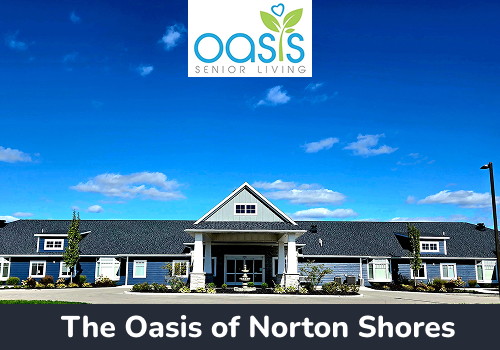
Bridging these empirical insights into everyday senior living requires more than just playing background music; it demands a deliberate, sensory-rich architecture. This evidence-based philosophy is precisely what sets The Oasis of Norton Shores apart as a premier destination for senior living along the Lakeshore.
The Oasis of Norton Shores Amenities
| Movie Theater | Activity Rooms | Communal Spaces |
| • Immersive Acoustic Therapy • Targeted Auditory Activation • Shared Cinematic Experiences | • Structured Social Choruses • Active Music-Making • Group Cognitive Exercises | • Abundant Natural Light • Sensory-Rich Environments • Elegant Lounges for Connection |
Nestled close to the heart of the community at 6025 Harvey Street, The Oasis of Norton Shores translates neuroscientific research into an upscale, vibrant standard of care for families seeking the best senior living near Grand Haven, Michigan.
Rather than isolating sensory therapy to clinical rooms, The Oasis integrates acoustic engagement directly into its resort-style amenities:
- The State-of-the-Art Movie Theater: Designed with optimized acoustics, this space hosts immersive viewing and listening sessions that stimulate auditory networks and foster shared social experiences.
- Vibrant Activity Lounges & Social Spaces: From spontaneous sing-alongs to organized music programs, residents are consistently given opportunities to participate in active music-making, driving the structural neuroplasticity required for lasting cognitive resilience.
- A Culture of Purposeful Engagement: Whether a resident is in independent living, assisted living, or utilizing specialized memory care, the staff utilizes tailored sensory intervention to reduce anxiety, spark old memories, and maintain high emotional wellness.
Elevating the Lakeshore Senior Living Experience
By fostering cognitive resilience through sensory-rich environments, The Oasis of Norton Shores ensures that senior care is never just about management—it is about enhancement. For families throughout Muskegon and Ottawa counties, it offers a peaceful sanctuary where science and luxury meet, allowing seniors to live their next chapter with dignity, sharpness, and a joyful song in their hearts.
Finding the Right Path Forward
If you are currently navigating the transition to senior living for a loved one, exploring how environment and specialized programming impact cognitive health is an essential first step.
Experience the difference that a sensory-rich, evidence-based environment can make for your family. Schedule a private tour of The Oasis of Norton Shores today or call our care team to discuss our personalized holistic wellness programs.

Neil Beltran 10 July 2026
Sources
Herholz, S. C., & Zatorre, R. J. (2012). Musical training as a framework for brain plasticity: Behavior, function, and structure. Cortex, 48(3), 311–330. https://www.sciencedirect.com/science/article/abs/pii/S0010945212001098
Lakshmanan, J., Gopalakrishnan, B., & Rajendran, S. S. (2025). Effectiveness of mindfulness-based approaches on stress, depression, and serum cortisol among elderly in old age homes. Journal of Pharmacy and Bioallied Sciences, 17(Suppl 3), S2737–S2740. https://doi.org/10.4103/jpbs.jpbs_655_25
Otaka, I., & Kumagai, S. (2024). Sensory integration: A novel approach for healthy ageing and dementia management. Brain Sciences, 14(3), Article 285. https://doi.org/10.3390/brainsci14030285