
For families exploring memory care in Detroit, Michigan, understanding this link between social health and neurobiology is changing how we evaluate senior living. It turns out that isolation isn’t just a threat to a senior’s mood; it is a direct accelerator of cognitive decline.
We often think of physical fitness in terms of steps walked, weights lifted, or cardiovascular stamina. But for the aging brain, a different kind of workout dictates long-term vitality. Neurologists increasingly view the human brain through the lens of the “social synapse”—the biological reality that our neural networks require conversational complexity, emotional connection, and consistent human contact to physically ward off atrophy.
When searching for the best memory care in Southeast Michigan, the ultimate goal is finding an environment that transforms socialization from a casual pastime into a core clinical strategy.
Building Cognitive Reserve: How Meaningful Interaction Fights Dementia
For years, neuroscientists have studied why some individuals maintain sharp cognitive function despite showing the physical hallmarks of Alzheimer’s disease or dementia upon brain imaging. The leading explanation is the cognitive reserve hypothesis and socialization.
Cognitive reserve is the brain’s ability to improvise, find alternate neural pathways, and work around damaged areas. Think of it as building a detour on a blocked highway.

Active conversation is one of the most rigorous, total-brain workouts available. Unlike passive activities like watching television, a simple chat requires the brain to simultaneously execute multiple complex tasks:
- Auditory Processing: Interpreting tone, speed, and meaning.
- Visual Cues: Reading facial expressions and body language.
- Emotional Synthesis: Empathizing and connecting memories.
- Speech Creation: Retrieving vocabulary and mapping a coherent response.
This rapid-fire neural stimulation is one of the most effective natural ways to slow dementia progression. Furthermore, the clinical benefits of social interaction for seniors extend far beyond the brain. Studies tracking cognitive health and longevity in seniors demonstrate that robust social engagement drastically lowers cortisol (stress hormone) levels. Because chronic stress impairs cellular repair, reducing it serves as one of the most overlooked immune system boosters for older adults, directly proving the positive impact of social engagement on senior immune health.
The Proximity Advantage: Human Contact vs. Cognitive Decline
| Benefit Category | The Isolated Brain | The Socially Engaged Brain |
| Dementia Risk | High cortisol, accelerated neural atrophy | Fortified cognitive reserve, active detour pathways |
| Immune & Mood | High inflammation, seasonal depression | Lowered stress hormones, optimized immune health |
| Longevity | Linked to higher mortality rates | Increased lifespan and prolonged daily autonomy |
The Metro Detroit Challenge: Breaking the Cycle of Seasonal Isolation
For seniors living independently in Southeast Michigan, maintaining an active “social synapse” comes with regional hurdles. Senior living in Metro Detroit requires confronting our distinct climate.
The cold, dark, and icy winter months naturally breed seasonal isolation. When driving becomes hazardous and walking outside is no longer safe, seniors staying at home in Detroit, Pontiac, or Clarkston frequently experience prolonged periods of solitude.
This seasonal withdrawal frequently triggers late-life depression and accelerates cognitive symptoms. Families often witness a noticeable dip in their loved one’s memory and mood between November and April. Recognizing this pattern is a key step in reducing late-life depression through community living, where built-in social connections completely eliminate weather-induced isolation.
The Oasis Solution: Reconnecting the Synapse in Clarkston
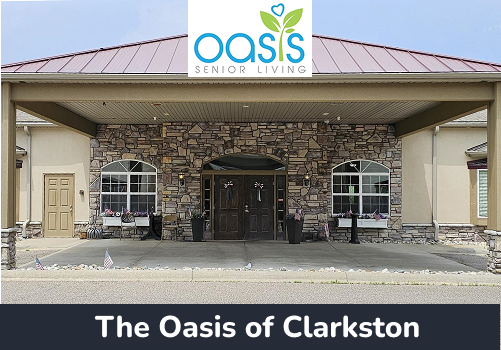
Confronting the realities of cognitive decline means looking beyond traditional clinical care to find a lifestyle engineered for connection. This is exactly how The Oasis of Clarkston structures its daily memory care community.
Located in Oakland County, The Oasis is designed from the ground up to counteract isolation and optimize socialization and brain health in the elderly.
Purposeful Architecture and Programming
Instead of long, institutional hallways that breed confusion and withdrawal, The Oasis features an open, accessible, single-story neighborhood design. This layout naturally guides residents into shared, vibrant spaces.
- Structured Social Circles: Daily programming is intentionally calibrated to stimulate conversational recall and physical coordination without causing cognitive fatigue.
- Dignified, Expert Care: Staffed by professionals trained in specialized dementia therapies, the team knows exactly how to improve mood in dementia patients through validating communication and reducing frustration.
- A Continuous Path: As one of the premier dementia care facilities in Oakland County, The Oasis allows seniors to smoothly age in place, surrounded by familiar peers and consistent caregivers even as their care needs evolve.
By weaving intensive neurological engagement into the fabric of daily life, The Oasis of Clarkston ensures that local seniors aren’t just managing a diagnosis—they are actively feeding their brains the social connection required for a healthier, more vibrant life.
Take the Next Step: Experience The Oasis
If you are noticing the compounding effects of isolation on your loved one’s memory or mood, the right environment can make all the difference. Contact the care experts at The Oasis of Clarkston today to tour our community, explore our specialized memory care programming, and see how we keep Southeast Michigan seniors deeply connected, safe, and engaged.

Neil Beltran 8 July 2026
Sources
- The Harvard T.H. Chan School of Public Health or The National Institute on Aging (NIA).
- The National Academies of Sciences, Engineering, and Medicine (NASEM).
- The American Psychological Association (APA) or The Journal of Gerontology.
- The Centers for Disease Control and Prevention (CDC) or The Michigan Department of Health and Human Services (MDHHS).