The Secret to Staying Mobile Longer: 5 Gentle Movement Habits Seniors in Plainfield Swear By

It starts with something so ordinary that you barely notice it.
One morning, getting out of your favorite chair takes a little more effort. Walking through the grocery store feels more tiring than it used to. Or perhaps you've started holding the railing more tightly when climbing the stairs.
For many older adults in Plainfield, Illinois, these small changes raise an important question:
“How can I keep moving comfortably and independently as I get older?”
The encouraging news is that staying mobile doesn't always require a gym membership, intense workouts, or complicated exercise routines.
Sometimes, it begins with five minutes of gentle movement, a comfortable pair of shoes, and a commitment to moving a little more each day.
Research suggests that regular physical activity can help older adults maintain strength, balance, flexibility, and the ability to perform everyday tasks.
Whether you're enjoying time with grandchildren, visiting downtown Plainfield, or exploring senior living options near Oswego, maintaining mobility can help you continue doing the things that matter most.
Here are five practical movement habits that older adults can consider incorporating into their routines.
Why Staying Mobile Matters More Than You Might Think
Mobility is about more than walking.
It's the ability to get out of bed, rise from a chair, reach for a favorite book, prepare meals, and move safely through familiar spaces.
As people age, changes in muscle strength, balance, joint function, and physical endurance can make these activities more challenging.
But aging doesn't automatically mean giving up movement or independence.
According to the Centers for Disease Control and Prevention, adults aged 65 and older benefit from a combination of aerobic activity, muscle-strengthening exercises, and balance activities.
The CDC generally recommends at least 150 minutes of moderate-intensity aerobic activity per week, muscle-strengthening activities on two or more days, and balance activities as part of the weekly routine. Individual activity levels should be adapted to health and ability.
Read the CDC Physical Activity Guidelines for Older Adults.
These recommendations matter because movement supports several areas of healthy aging:
Joint health: Appropriate movement can help maintain flexibility and support comfortable daily activity.
Balance: Practicing balance-related movements can help reduce fall risk.
Muscle strength: Stronger muscles support standing, walking, and other daily activities.
Independence: Maintaining physical function can make everyday tasks easier.
Emotional well-being: Regular activity can support mood and overall quality of life.
The goal isn't to move like you did at 30.
It's to maintain the ability to enjoy life at 70, 80, 90, and beyond.
1. Start the Morning With Gentle Chair Stretches
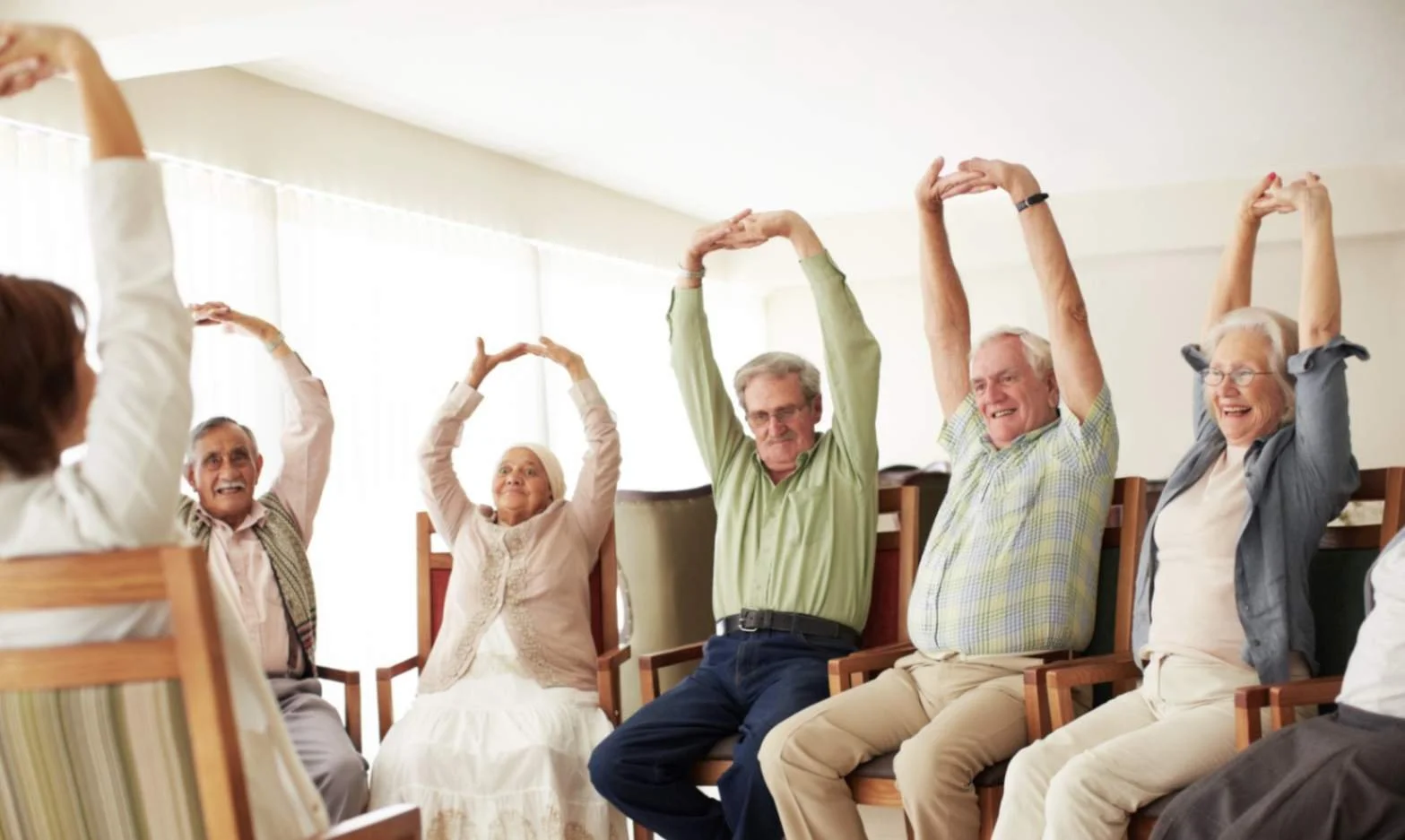
Before rushing into your day, you sit comfortably in a sturdy chair, roll your shoulders, and gently stretch your arms.
It might seem too simple to make a difference.
But gentle movement can help reduce feelings of stiffness and prepare your body for everyday activities.
Try this gentle chair routine
Sit upright in a sturdy, non-rolling chair with your feet flat on the floor.
Slowly roll your shoulders backward five times.
Gently raise one arm as comfortably as possible, then lower it.
Repeat with the other arm.
Slowly straighten one knee, then lower your foot to the floor.
Repeat on the other side.
Move within a comfortable range without forcing a stretch.
Why it helps: Gentle range-of-motion exercises can support joint flexibility and help maintain movement patterns used in daily activities.
The National Institute on Aging provides additional guidance through its Exercise and Physical Activity resources.
2. Make Short Daily Walks Part of Your Routine
Walking is one of the most accessible forms of physical activity for many older adults.
You don't need to walk several miles to begin developing a routine.
For someone who has been inactive, even a short walk may be a reasonable starting point, depending on their health and mobility.
How to begin
Consider starting with a comfortable walk of five to ten minutes, if appropriate for your abilities.
Choose a familiar, level, well-maintained route, and wear supportive footwear.
As your stamina improves, you may gradually increase your walking time.
For older adults in Plainfield, a neighborhood sidewalk, indoor community corridor, or accessible local walking path may provide a convenient setting.
On days when Illinois weather makes outdoor walking uncomfortable, indoor walking may be a practical alternative.
Why it helps: Walking supports cardiovascular fitness, lower-body endurance, and the physical capacity needed for everyday activities.
A simple habit worth trying
Instead of thinking, “I need to exercise for an hour,” consider asking:
“Can I add a comfortable walk to my morning or afternoon?”
Small, sustainable routines are often easier to maintain than ambitious plans that feel overwhelming.
3. Practice Balance Exercises to Help Reduce Fall Risk
One of the most important aspects of healthy aging is maintaining balance.
Falls can lead to serious injuries and may affect an older adult's confidence in moving independently.
According to the CDC, falls are a leading cause of injury among older adults, but many fall risks can be reduced.
See the CDC Older Adult Fall Prevention resources.
A gentle balance exercise: Supported weight shifts
If a healthcare professional has confirmed that standing balance exercises are appropriate for you:
Stand beside a sturdy countertop or railing.
Keep both feet on the floor.
Hold the support securely.
Slowly shift a small amount of weight toward one leg.
Return to the center.
Repeat toward the other leg.
Keep the movements slow and controlled.
Anyone with significant balance difficulties should perform these exercises only with appropriate professional guidance or assistance.
Why it helps: Balance training challenges the body's ability to maintain stability and can form part of a broader fall-prevention program.
For older adults who have fallen previously, a physical therapist can recommend exercises tailored to their abilities.
4. Strengthen Your Legs With Gentle Sit-to-Stand Practice
Think about how often you stand up during an ordinary day.
You rise from bed, get up from the dining table, stand after watching television, and move between rooms.
These actions rely on leg strength, coordination, and balance.
One functional movement commonly used in older-adult exercise programs is the sit-to-stand.
How to practice safely
Choose a stable chair that will not slide.
Sit with both feet firmly on the floor.
Place your hands on the armrests if needed.
Lean forward slightly and stand using controlled movement.
Slowly sit back down.
Repeat only as many times as feels comfortable and safe.
If you cannot stand safely without help, do not attempt this exercise alone.
Why it helps: Sit-to-stand practice can help strengthen muscles used for everyday transfers and mobility.
The National Institute on Aging identifies muscle-strengthening activities as an important part of healthy aging.
5. Add Gentle Movement to Activities You Already Enjoy
Not every healthy movement habit has to feel like exercise.
Sometimes, the best opportunities come from activities you already enjoy.
For example:
Watering flowers in a raised garden.
Walking around the house during television breaks.
Participating in an appropriate group movement class.
Dancing gently to a favorite song.
Stretching after sitting for an extended period.
Taking a short walk with a family member.
The key is choosing activities that are safe, enjoyable, and appropriate for your physical abilities.
Why enjoyment matters
An exercise routine is only useful if you can maintain it.
Choosing activities that feel meaningful may make regular movement easier to incorporate into daily life.
For some seniors, movement is more enjoyable when shared with friends or family.
For others, a quiet morning routine may be the better fit.
The best movement habit is one you can practice consistently and safely.
How Families Can Encourage Healthy Movement at Home
Supporting an aging parent doesn't always mean creating a complicated fitness schedule.
Sometimes, encouragement and companionship make the greatest difference.
Consider inviting your parent on a short walk, helping them find an age-appropriate exercise class, or encouraging them to speak with a healthcare professional about safe movement options.
It's also important to recognize when additional assistance may be beneficial.
If your loved one is experiencing repeated falls, difficulty standing, worsening mobility, or challenges managing everyday activities, discuss these concerns with their healthcare provider.
New or rapidly worsening mobility problems deserve medical evaluation rather than simply being attributed to aging.
How Senior Living Communities Can Support an Active Lifestyle
For some older adults, staying physically active becomes more challenging when they live alone.
Transportation difficulties, limited social opportunities, or concerns about falling can make movement less accessible.
A supportive senior living environment may help by providing opportunities for recreation, social interaction, and assistance with daily activities.
At The Oasis of Plainfield, families can explore independent living, assisted living, and memory care options.
When visiting the community, ask about movement-friendly activities, walking spaces, accessibility, and whether appropriate exercise or wellness programming is available.
For families searching for assisted living in Oswego IL, nearby Plainfield may also be worth considering when comparing senior living options.
Frequently Asked Questions About Senior Mobility
What is the best exercise for seniors with limited mobility?
The most appropriate exercise depends on the person's physical abilities and medical conditions. Chair-based movement, gentle range-of-motion exercises, and supervised strengthening activities may be suitable for some individuals.
Can older adults improve their balance after age 70?
Yes. Many older adults can improve balance and physical function through appropriately designed exercise programs. Results vary, and individuals at high risk of falling should seek professional guidance.
How often should seniors exercise?
The CDC recommends that older adults aim for regular aerobic, strength, and balance activities. Those unable to meet the full recommendations should remain as active as their abilities and health conditions allow.
Can assisted living help seniors stay active?
Assisted living communities may provide opportunities for recreation, social activities, and everyday movement. Families should confirm specific programs and accessibility features directly with each community.
Is walking enough to maintain mobility?
Walking is beneficial, but a well-rounded activity routine also includes muscle strengthening and balance training, adapted to individual abilities.
The Real Secret to Staying Mobile Longer
Healthy aging isn't about competing with your younger self.
It's about continuing to do the things that make life meaningful.
Walking with your grandchildren. Standing comfortably to prepare a favorite meal. Enjoying a garden. Spending an afternoon with friends.
The five movement habits discussed here—gentle stretching, walking, balance practice, strengthening, and enjoyable daily activities—can help support the physical abilities behind those moments.
You don't have to do everything at once. Start with what feels manageable, stay consistent, and build from there.
Before beginning a new exercise routine, especially if you have a history of falls, heart problems, significant joint pain, or mobility limitations, consult a qualified healthcare professional. Stop exercising and seek appropriate medical attention if you experience chest pain, faintness, or other concerning symptoms.
Discover Senior Living That Supports an Engaging Lifestyle
Stay Active. Stay Connected. Feel at Home.
At The Oasis of Plainfield, families can explore senior living options designed around comfort, independence, and personalized support.
Whether you're planning ahead or looking for additional assistance for someone you love, discover a community where meaningful daily living remains a priority.